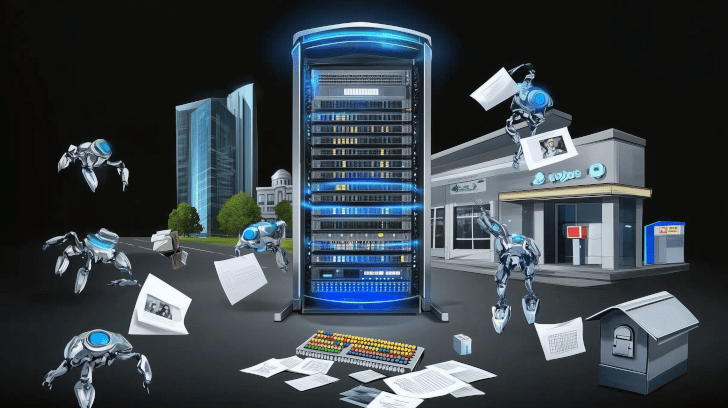
A small business was facing a classic problem: invoices were arriving by email, post, as scans, and as photos. Bank statements from multiple banks and credit cards had to be reconciled manually. Anyone who has experienced this, knows that it takes hours every week, is error prone, and very annoying.
The idea was clear: a solution that automatically taps into all these sources, extracts the relevant data from the documents, and practically does the accounting by itself. It sounds simple, but it’s not—because invoices never look the same, amounts are listed in different places, and calculating VAT across national borders has its own pitfalls.
I first analyzed what was really needed and what is technically feasible with AI today. This resulted in a solution concept that sensibly combines existing AI services instead of building everything from scratch. Within two weeks, a functional prototype was ready: receipts are automatically recognized, categorized, assigned to the correct transactions, and filed correctly. The system recognizes suppliers, amounts, currencies, and tax rates—and independently selects the appropriate accounting account.
Unfortunately, the accuracy of the AI services found was not high enough, so a control point was also built in. This allows accountants to check the data entered instead of typing everything manually. This takes 5 seconds instead of 30 and massively increases quality, as it means that a peer review has already taken place (human and machine).
The result could be tested directly in a real process instead of spending months working on a theoretical solution. The prototype was also so stable that it could be reused and further developed immediately, and it is still running live today.